Why I'm Avoiding ANDOR

What exactly turned Star Wars into a phenomenon right out the gate?
Its spectacle was mind-blowing, sure. But on a deeper level, it resonated with audiences because of its idealistically clear vision of good and evil. It was an antidote to the ambiguities of popular fare like The Godfather or even the lighter Smokey and the Bandit. It was what Tolkien would define as escapism. It was why Sir Alec Guinness agreed to play Obi-Wan despite how hokey he found the script.
And to give credit where it’s due, I likely wouldn’t have seen any of this as clearly as I do now if it weren’t for SDG‘s articles on Rogue One—more on that one later.
As the Original Trilogy went along, it would reveal the Jedi to be not as virtuous as Obi-Wan initially described, deceptively manipulating Luke Skywalker. And I can appreciate the more ambiguous framework of the Prequel era—most evident in the canonical Clone Wars series—because the Originals hinted at it.
But the Originals kept the Rebel Alliance as an example to strive for, bringing the best out of all who joined them and only killing aggressors within the heat of battle. And if I remember correctly, this vision of the Rebellion continued into the Rebels animated series, which didn’t find its footing until the end of season one, where the Ghost crew found a truly noble purpose by joining the wider Alliance.
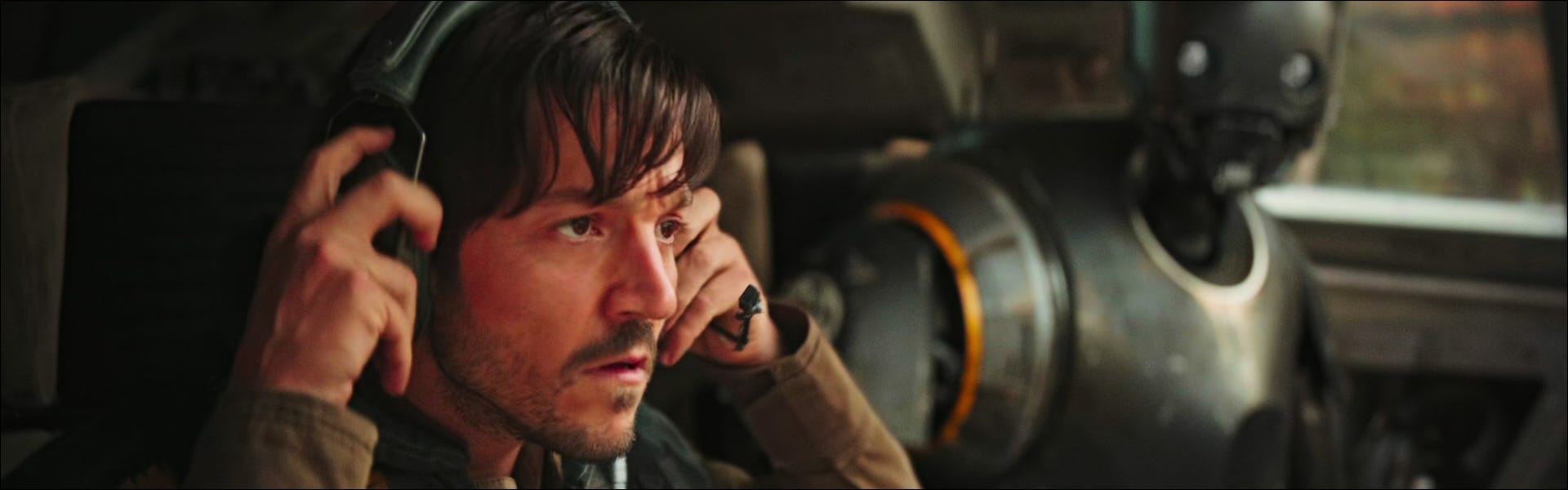
But then Rogue One, Star Wars ‘77’s immediate prequel, revealed that the Rebels have active assassins and other extremists doing their dirty work in the Alliance’s name. One of these assassins is Cassian Andor, the protagonist of Rogue One’s own prequel series—the most widely praised project of the Disney Star Wars era. I watched Andor’s first three episodes, and I found them slow and overly serious, which even those who appreciate the series agree are uneventful.
But, with all due respect to its fans, I can’t get myself to care whether the rest of the series is a masterpiece, because I know that the Rebels won’t make Cassian a better person—that he’s going to be willing to execute his own informant as an easy way out of a corner at the beginning of Rogue One, and that he won’t redeem himself until he goes against the Rebellion’s orders. Heck, the series reveals that the Rebellion hires him in the first place for executing a disarmed Imperial who’s begging for his life! Han Solo was more justified in beating someone with a gun aimed at him from across a table to the punch!—or blast, rather.
Of course, the lead of The Mandalorian has also been cold-blooded at times, but I can give him the benefit of the doubt because neither Mandalorians nor bounty hunters were initially established to be ideal good guys, and I don’t yet know how he’s going to grow from there. And then The Last Jedi, the Sequel I admire the most, reveals the heroic Resistance to have bought from arms dealers who enslave children, but that’s a minor enough plot point for me to be able to bracket.
One objection I’ve gotten to my objection to Cassian’s murdering habit before is that “Luke murdered everyone on the Death Star”... I say, was everyone on the Death Star not an aggressor armed with a super laser who was killed in the heat of battle? Another was that “Sometimes innocent people need to die in order to bring about the greater good, and that’s the truth”… Do good ends ever justify evil means? Heck, did such a rationale not lead to genocidal regimes in the 20th century?
Of course, the real world is morally ambiguous, and we need reminders of that. But we also need reminders of what we could be. Plenty of modern media already reflects the former, and when you subvert the one faction in Star Wars that offered an antidote to such realism—that made Han Solo and Lando Calrissian into better people—then I believe Star Wars becomes the very thing it swore to destroy.
I appreciate your ideas, and actually felt the same as I watched both Rogue One and both seasons of Andor. What was difficult is that these are the best entertainment to come out of Star Wars since Lucas sold his work to the Evil House of Mouse--and yet, they never quite felt like Star Wars. Too gritty. Nearly grimdark in tone, and sometimes in characterization. No magic or wonder or hope.
Your take brings up an interesting question: should fiction be prescriptive or descriptive? Should fiction show us the world as it could (and should) be, or how it is?
For me, I tend to enjoy descriptive works more than prescriptive, though I realize that we need stories that show us a better way.
As for Andor, I think the show's murky mortality enhances the good guy's goodness in the OG Trilogy. They could be the cutthroats of Andor, but they choose not to be, and in the end that lets them win (until the New Republic throws away the victory by being as clumsy as they are stupid). The Rebels of Andor wouldn't have won the day at Endor, for they wouldn't have connected with the Ewak the way are heroes did.
I also like how Andor shows what most revolutions are like. I think Americans over idolize revolutions because America was born from one. The fact is more revolutions go the way of the Russian or French Revolutions then like the American, and the American Revolution wasn't as clean as we like to remember.
Anyway, that's my position. Appreciate you explaining yours.